
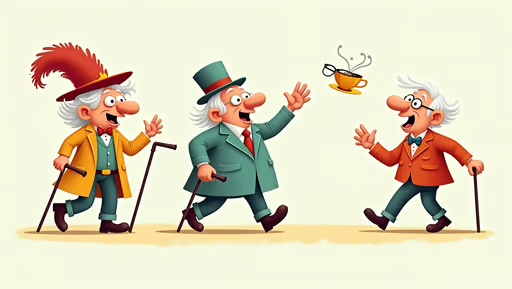
Professor Patina once told me that nothing valuable arrives pristine. He said this while running his fingers along the edge of a chipped desk, the kind that has been leaned on by more thoughts than it was ever designed to carry. I didn’t know it then, but that moment marked my first true conversation with growing old — not as an idea, but as a texture. Something you feel under your hands before you ever put words to it.
Growing Old as a Surface, Not a Cliff
Professor Patina taught me to look at wear before I looked at loss. He said growing old doesn’t announce itself with trumpets or warnings; it accumulates quietly, like fingerprints on glass. When I sit with him, I don’t feel rushed toward endings. I feel invited to notice what has already lasted.
Vacant Space 2
A holding space for, possible, future development.
There are days when my body feels oddly rearranged, sensations arriving without ceremony, like unlabelled parcels. On those days, I think of Dismal Dame, who taught me that feeling doesn’t require explanation to be legitimate. Professor Patina never asks why. He asks where.
On Growing Older Without Apology
There is a difference, Patina insists, between growing old and growing older. The latter, he says, is simply a calendar doing its job. I feel growing older in the way time folds back on itself — how yesterday feels closer than last week, and childhood sometimes closer than breakfast.
When I mention growing older aloud, Professor Patina nods, as though I’ve identified a watermark rather than a flaw.
Getting Old and the Art of Not Rushing
I once confessed to Professor Patina that getting old felt like misplacing things more often. He smiled and said getting old is mostly about misplacing urgency. I notice it in myself — how fewer things demand immediate resolution. Some questions are content to sit unanswered, like books left open face-down on a table.
This is where nonsense becomes useful. I learned that from joyful nonsense verse, where meaning survives perfectly well without being pinned down.
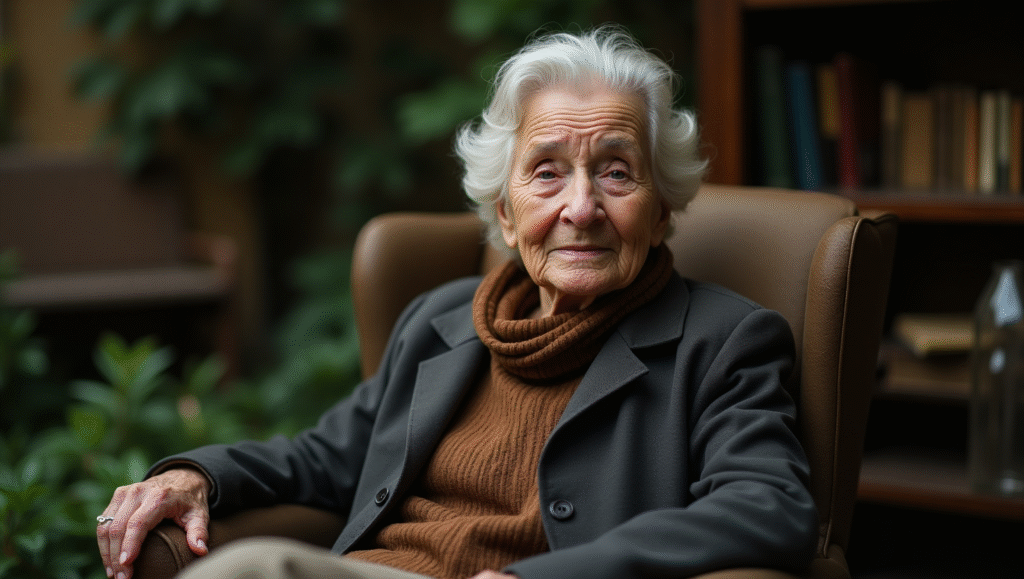
Growing Old and the Furniture of Thought
Professor Patina lectures to chairs. He says they listen better than people. When he talks about growing old, he traces scratches like footnotes, explaining nothing, proving nothing, simply acknowledging use.
He once muttered a sequence under his breath — happening what you can, can do whats happening, whats happening what — and told me that ageing often feels like rearranging those same words daily until one of them finally sits comfortably.
The Process of Growing Old, Lived Sideways
I don’t experience garnering years as a straight line. It’s more like a spiral staircase where some steps creak and others don’t. The process of ageing shows up for me in the way memory edits itself — trimming drama, keeping texture.
Sometimes, odd sensations arrive like old acquaintances, and I’m reminded of Sir Prickalot, who taught me endurance doesn’t require heroics, only presence.
Growing Old Gracefully Without Trying
Professor Patina dislikes the phrase trying to age well. He says growing old gracefully happens when you stop rehearsing it. I’ve noticed ageing with style feels less like elegance and more like forgiveness — of myself, of time, of the furniture that no longer matches.
Grace, Patina insists, is a side-effect, not a goal.
Growing Old in America, from Afar
I don’t live there, but I hear stories of growing old in America — narratives shaped by speed, productivity, and resistance to wear. Professor Patina listens politely, then runs his hand across a scarred tabletop as if to say that usefulness leaves marks everywhere, regardless of postcode.
He once handed me an article about the ageing process. I read it slowly, not for guidance, but for resonance — noticing which sentences echoed my own experience and which drifted past like weather reports.
A Visit from Dr Parsley
One afternoon, Professor Patina was joined by Dr Parsley, who spoke in herbs and metaphors. They didn’t debate. They shared silence. It struck me then that gaining years often looks like fewer arguments and better company.
Nonsense Verse: Professor Patina Speaks
Professor Patina dusted a thinking chair,
 And murmured of growing old with care.
 “See the shine where hands once stayed,
 That’s not decay — it’s progress made.”
He counted scratches, one through ten,
 Each mark a friend, not where-or-when.
 “Don’t chase smooth,” he said, quite bold,
 “The best things come from ageing gracefully.”
The chair agreed with a wooden sigh,
 As minutes slowed and years walked by.
 No rules, no race, no finish line —
 Just time behaving, mostly kind.
Gentle Reflection
What growing old has given me is not certainty, but permission. Permission to pause, to feel without fixing, to accept that some days are about happening what you can and nothing more. Professor Patina never framed ageing as loss. He framed it as evidence — proof that something has been used, leaned on, lived with.
Growing Old as Continuity, Not Decline
I no longer experience growing old as a narrowing. It feels more like sediment — layers settling, forming something solid enough to stand on. When I think back, I realise that accumulating years has quietly taught me which questions are worth carrying and which can be set down without ceremony.
Conclusion
If growing old is anything, it is a conversation that deepens rather than concludes. I feel it when I move more slowly but notice more. I feel it when certainty loosens its grip. Professor Patina would say that wear is not the opposite of worth — it is the evidence of it. And in that sense, growing old has been less about endings, and more about finally understanding what has been there all along.
Deep thinking becomes profound when it changes how you see, not just what you know.
Stephenism
🎵 Soul from the Solo Blogger — Tunes from Túrail.