Fatigue doesn’t knock. It doesn’t announce itself. It simply sits down beside me one day and refuses to leave.
Not the kind that yawns or stretches. This one has weight. It presses gently but persistently, like an extra gravity that only I can feel. Over time, I’ve learned that fatigue management isn’t something I do — it’s something I live alongside, negotiating terms as the fog thickens and thins.
The Ant Who Didn’t Turn Up
In one corner of the fog lives an ant who was famous for never stopping. He marched, he lifted, he planned. The colony admired him for it.
Vacant Space 3
A space for, possible, future development.
Then one Sunday, he didn’t show up.
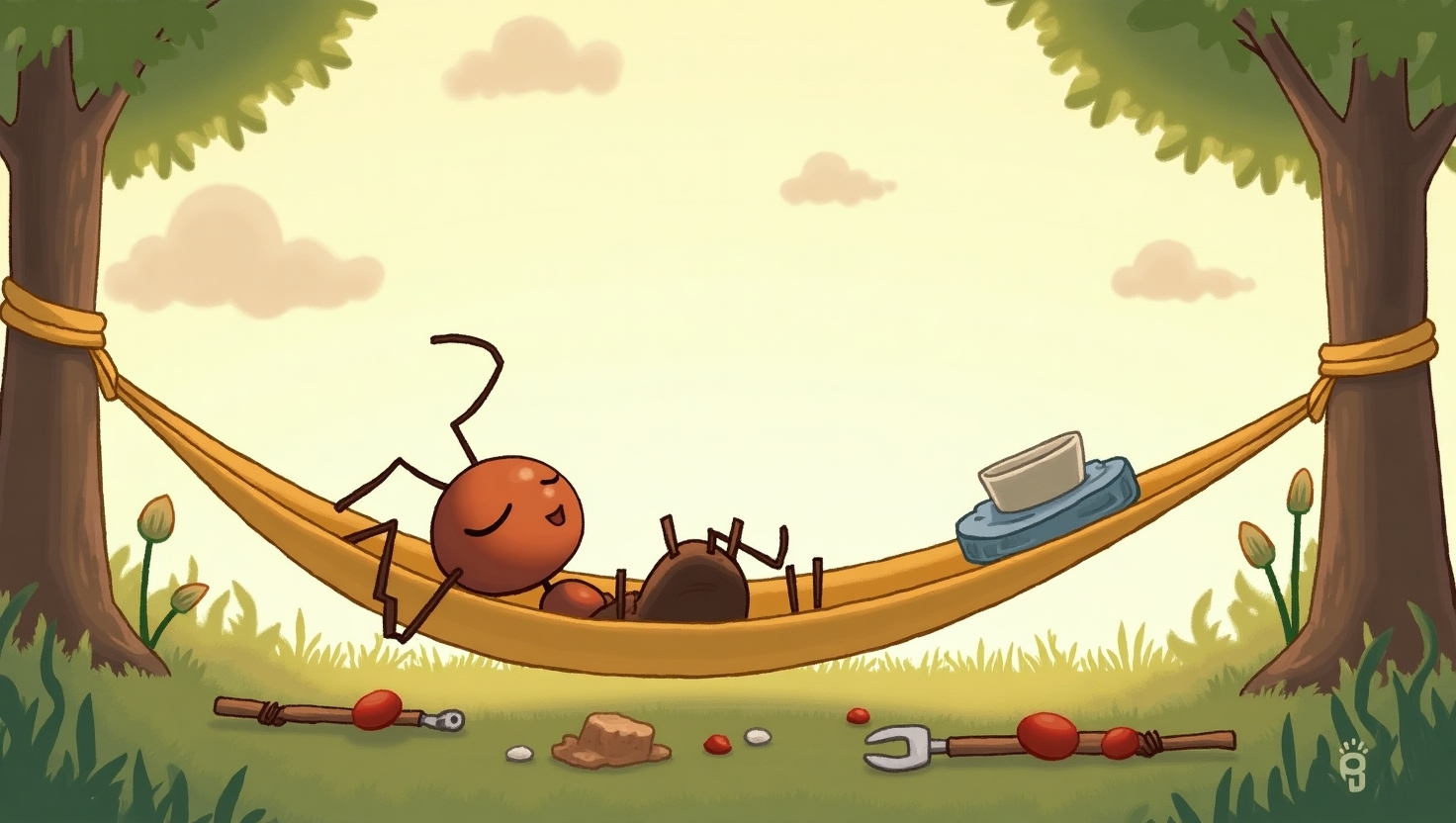
No collapse. No drama. He simply lay beneath a blade of grass and watched the light shift. When Monday came, he returned — quieter, steadier, unchanged yet unmistakably wiser.
That ant lives permanently in my thinking now. He belongs in the same landscape as all the other fog-fables I keep returning to:
👉 Fables in the Fog
He taught me that stopping can be an act of precision, not surrender.
When Energy Stops Behaving
Fatigue doesn’t drain evenly. Some days it arrives before breakfast. Other days it waits politely until mid-afternoon, then drops the floor away without warning.
This is fatigue management in MS as I experience it — energy behaving like a mischievous animal, sometimes obedient, sometimes feral. I wake with plans and watch them dissolve into revisions.
The fog makes thinking feel slower, heavier. Thoughts echo before they land, like the bat who keeps circling until the space finally announces itself.
👉 The Blundering Bat
Fatigue doesn’t always shout. Often it whispers, and I’ve learned that ignoring whispers is how the fog thickens.
The Tortoise, the Teacup, and the Clock
Time behaves oddly when energy becomes precious. Minutes stretch. Hours compress. Tasks that once took a moment now ask for negotiations and pauses.
I picture a tortoise carefully carrying a teacup across a ticking clockface. Slow not because it must be, but because spilling matters.
👉 The Tortoise & the Teacup
That image sits at the heart of MS-related fatigue management for me. It isn’t about speed. It’s about intention.
Tortoise-Time
I don’t rush days anymore. I portion them. Energy has a budget now — not written down, just felt.
👉 The Tortoise-Time Budget
Spend too much early, and the afternoon collapses. Save too much, and the day feels unlived. The ant understood this instinctively.
Light That Flickers, Legs That Pause
Fatigue rarely travels alone. It brings friends.
Sometimes it dims the world, like a lamp that forgets its purpose halfway through glowing.
👉 The Lamp That Forgot to Glow
Sometimes it settles into my legs, turning simple movement into a careful negotiation with gravity. When that happens, I think of the dog who found the accessible bench — not as defeat, but as dignity.
👉 The Accessible Bench
Fatigue doesn’t remove the path. It simply asks me to sit down more often.
Odd Sensations, Heavy Quiet
There are days when fatigue changes how my body speaks. Feet feel padded. Hands feel distant. Sensation becomes editorial rather than factual.
A spoonful of socks appears where certainty used to live.
👉 A Spoonful of Socks
At the same time, thinking slows, reflections mislead, and the philosopher’s cat bows politely to the wrong moon.
👉 The Philosopher’s Mirror
This is managing fatigue with MS as I know it — not separation, but overlap. Everything influences everything else.
What the Fog Leaves Behind
Fatigue has a curious side-effect: it edits ruthlessly. Only the important things survive intact.
Memory slips. Plans simplify. Attention narrows. Captain Cogs adjusts his course again.
👉 Captain Cogs
Even certainty takes a step back. I remember the fox who stared at the great machine and realised that knowing something existed didn’t mean understanding it.
👉 The Fox & the Machine
Fatigue strips away excess. What remains feels oddly honest.
The Map with Circles
Some days I try to plan. Other days I accept that planning itself costs too much.
The map I carry now is full of circles — reminders rather than routes.
👉 The Map That Drew Circles
This is living with fatigue management — understanding that balance isn’t found by pushing forward, but by pausing often enough to stay upright.
Sunday Thinking
The ant didn’t abandon work. He abandoned relentlessness. That distinction matters.
Quiet Flourishing
Flourishing doesn’t always look like progress. Sometimes it looks like not collapsing.
Other Quiet Rooms
Occasionally, I step outside my own fog and notice that other rooms exist where fatigue is acknowledged, named, and quietly accommodated — not as judgement, just as reality.
👉 HSE – Fatigue
👉 NICE – Tiredness & Fatigue
I don’t go there for answers. Just for recognition.
Conclusion: The Wisdom of the Ant
The ant who took Sunday off didn’t stop being an ant. He simply learned the cost of never stopping.
That lesson sits at the centre of fatigue management for me. Whether I meet it as fatigue management in MS, MS-related fatigue management, managing fatigue with MS, or simply living with fatigue management, it shapes my days with a quiet authority I’ve learned to respect.
Fatigue still visits. The fog still rolls. But I no longer treat rest as retreat. Like the ant beneath his blade of grass, I’ve learned that sometimes the most powerful act is choosing not to march — and discovering that, somehow, life continues anyway.
“Joy isn’t a reward for finishing the work; it’s proof you chose the right kind.”
Stephenism
🎵 Soul from the Solo Blogger — Tunes from Túrail.